I’ve spent the last 12 years in the trenches of analytics and operations, supporting mid-market M&A deals and building executive-level decision memos. If there is one thing I’ve learned about high-stakes work, it’s this: if everyone at the table agrees with you, you aren’t looking hard enough at the data.
The current hype cycle treats LLMs like an oracle. You ask a question, you get an answer, you copy-paste into your slide deck. This is a massive failure of risk management. In due diligence, we call that "confirmation bias on steroids."
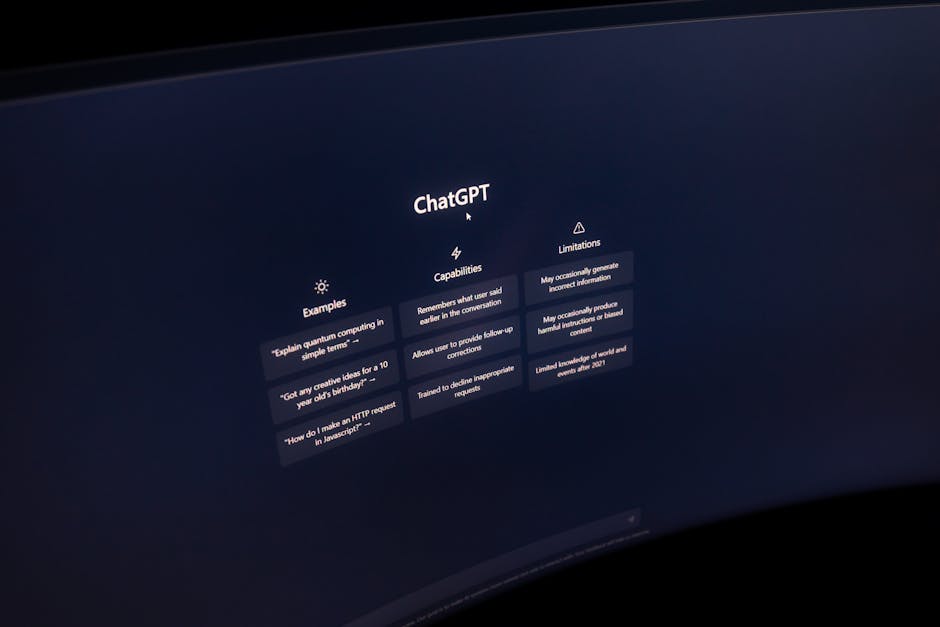
When I test new AI tools, I don't care about their creative writing speed. I care about their ability to identify their own blind spots. That is why I’ve started force-feeding the same prompt into GPT-4o, Claude 3.5 Sonnet, Gemini 1.5 Pro, and Grok. I don't want an echo chamber; I want a cage match. Here is why multi-model debate is the future of decision intelligence.

The Fallacy of the "Single Source of Truth"
Every https://instaquoteapp.com/can-suprmind-reduce-hallucinations-or-just-expose-them/ language model has a "personality" rooted in its training data and its RLHF (Reinforcement Learning from Human Feedback) tuning. GPT leans toward structured, logical, task-oriented outputs. Claude tends to be more nuanced, careful with safety, and excellent at synthesizing long documents. Gemini often excels at real-time search integration, while Grok—at its best—is unfiltered enough to catch the "elephant in the room" that other models might be tuned to downplay.
If you rely on just one, you are constrained by that model's particular set of hallucinations and biases. My "hallucination log"—a spreadsheet where I track where these models go off the rails—shows a distinct pattern: Model A will hallucinate a financial projection; Model B will catch the math error but fail the context; Model C will ignore the prompt's constraint. By forcing them to debate, I turn their weaknesses into a sieve that catches the mistakes.
What is Multi-Model Debate?
Multi-model debate is not about "which AI is best." It is about using disparate architectures as a cross-functional team. But here's the catch:. In a high-stakes scenario—like evaluating a potential acquisition target—you don't just send the financials to the accounting firm and call it a day. You have your accounting team, your legal counsel, and your ops leads review the document separately. Then, you bring them into a room to hash out the discrepancies.
This is what I do with LLMs. I set up a "round-robin" prompt chain:
The Thesis: GPT generates an initial hypothesis based on raw deal data. The Skeptic: I ask Claude to act as a "Red Team" advisor, explicitly searching for holes in the logic of the first draft. The Synthesis: I feed the original thesis and the critique into Perplexity to find real-world evidence or news cycles that support either side. The Final Call: I evaluate the conflict, identifying which model provided verifiable citations and which relied on buzzwords.The Benefits of Disagreement as a Product Feature
In most professional settings, we avoid conflict to maintain cohesion. In data-driven decision-making, that is a fatal error. Multi-model benefits go beyond mere efficiency; they create a system of "decision friction."
1. Blind Spot Detection
Models suffer from "model-specific blind spots." For example, some models struggle with complex nested logical conditions in Excel macros, while others struggle with interpreting the subtext of a board meeting transcript. By running a prompt through three different models, you ensure that if one hits a blind spot, the others likely won't.
2. Stress-Testing Assumptions
If you want to move away from overconfident, fluff-heavy answers, ask your models to argue. If GPT-4 suggests a market entry strategy, ask Claude, "What is the most likely reason this strategy will fail within 18 months?" The resulting disagreement isn't noise—it’s the most valuable data point you have.
3. Verifiable Citations
The bane of my existence is unverifiable citations. I track them religiously. By cross-referencing model outputs, you create a system of https://stateofseo.com/suprmind-vs-claude-validating-high-stakes-decision-memos/ checks. If Model A cites a source that Model B (which has web access) says doesn't exist, you know you have a hallucination issue.
Model Comparison: When to Use What
I maintain a simple internal checklist to determine which model I trust for which part of a due diligence memo. Here is a breakdown of how they stack up in high-stakes environments:
Feature GPT-4o Claude 3.5 Sonnet Gemini 1.5 Pro Grok Logical Reasoning High Highest Medium Medium Long-Form Synthesis Medium Excellent Best (Context Window) Low Real-time Data Good Variable Best Excellent Risk/Red Teaming High Highest Medium HighHow to Implement a "Checklist of Dissent"
If you want to use this in your own work, stop treating AI as a "search and replace" for your brain. Treat it as a junior analyst who is eager to impress but prone to mistakes. Use this checklist before you finalize any strategic decision:
- The Socratic Filter: Did I ask the model "What would change your mind about this conclusion?" before accepting the answer? The Evidence Audit: Are there citations, or is the model relying on buzzwords like "synergy," "paradigm shift," or "optimization" without defining the mechanics? The Contradiction Test: Have I provided the output of Model A to Model B to see if it can find a logical flaw? The "So What" Factor: Does the model address the operational impact, or is it giving me a generic overview?
The "What Would Change My Mind?" Standard
The most important part of my process isn't the AI—it's the question I force myself to ask the AI. What would change your mind?
If a model cannot articulate the specific conditions or data points that would invalidate its own conclusion, it is hallucinating confidence. A high-quality model should be able to say, "I am recommending this strategy, but if the Q3 churn rate exceeds 4%, the entire premise collapses."
When you use multiple models, you can compare their "invalidation triggers." If GPT says the trigger is churn rate, but Claude says the trigger is regulatory risk, you have identified the two biggest dangers to your deal. That is not just "using AI"—that is decision intelligence.
Final Thoughts: Don't Trust, Verify
I've seen this play out countless times: wished they had known this beforehand.. The moment you trust an AI implicitly is the moment you stop being an analytics leader and start being a liability. I am not suggesting you outsource your judgment to an AI debate club. I am suggesting that you use these tools to build a friction-heavy environment where your own assumptions are tested by multiple, distinct logic engines.
Stop looking for the "best" model. Start looking for the disagreement between them. That’s where the truth usually hides. And as for the hallucinations? Keep your log, track the patterns, and update your prompts. If you find a model that is consistently overconfident without proof, fire it from the debate. Real work requires real rigor, and in this game, rigor comes from questioning everything—especially the software you're paying for.